As an Amazon Associate we earn from qualifying purchases.
Choose anime keycaps by confirming the exact kit, checking the artwork's stated source, and matching its documented fit to your keyboard. Start with whether you want a coordinated set or a decorative accent. Hold off on ordering whenever a critical dimension, selected option, or return condition is unclear.
This guide is for keyboard owners comparing themed sets and artisan accents. It explains how to identify the product, assess its artwork documentation, and prepare a fit check before buying.
Quick takeaways
- For a coordinated keyboard design, check the complete included-key inventory.
- For a decorative accent, verify the selected sculpture, quantity, mounting position, and dimensions.
- Keep artwork provenance and physical compatibility as separate checks.
- Treat missing information as a question for the seller before checkout.
Editorial method: This guide draws on catalog text and manufacturer search excerpts captured October 15, 2026. The examples illustrate documented listing details; no hands-on testing was performed for this article.
Jump to: Product formats · Documented examples · Artwork sources · Fit worksheet · Legends and sculptures · Checkout checks · FAQ
Identify the anime keycaps product
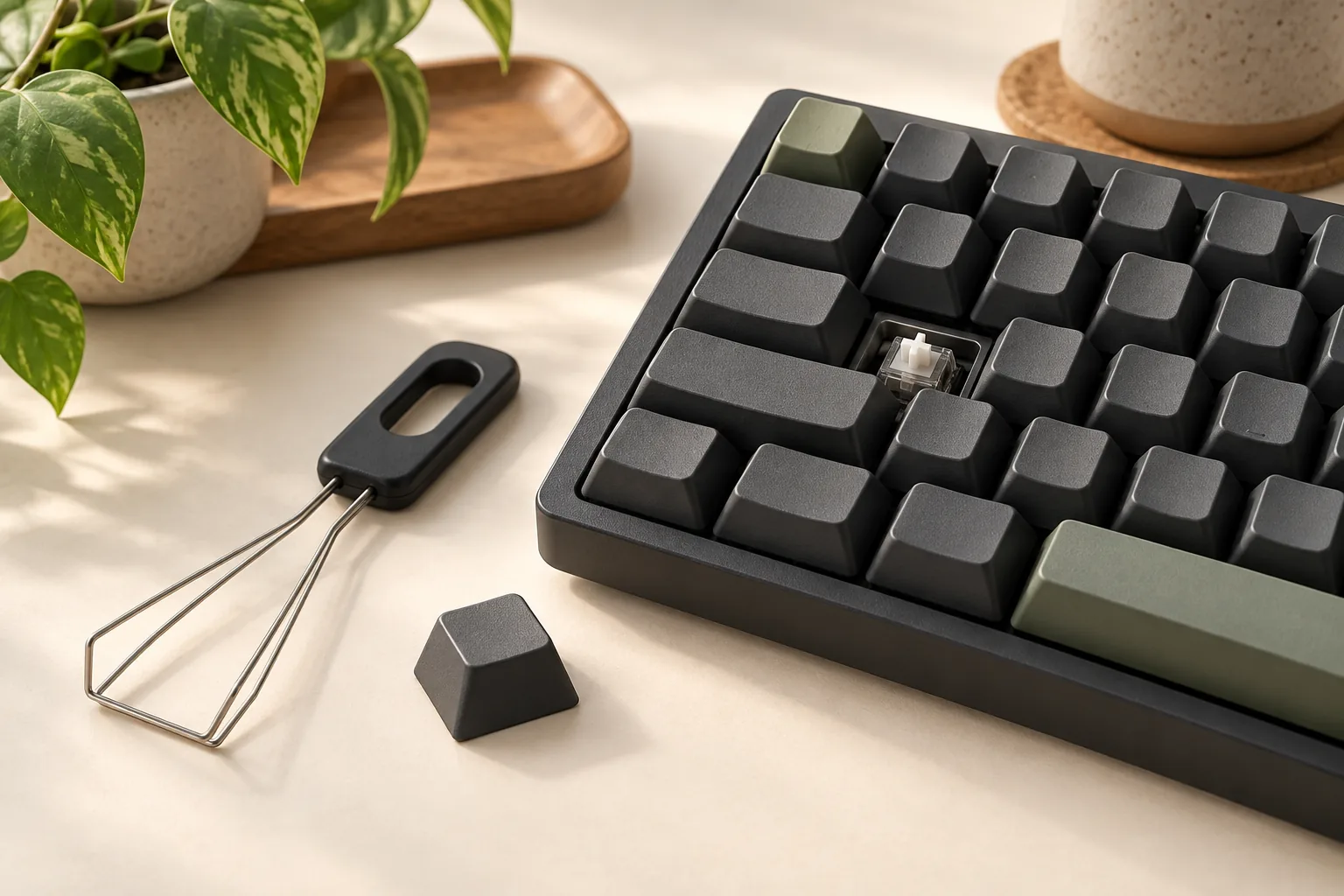
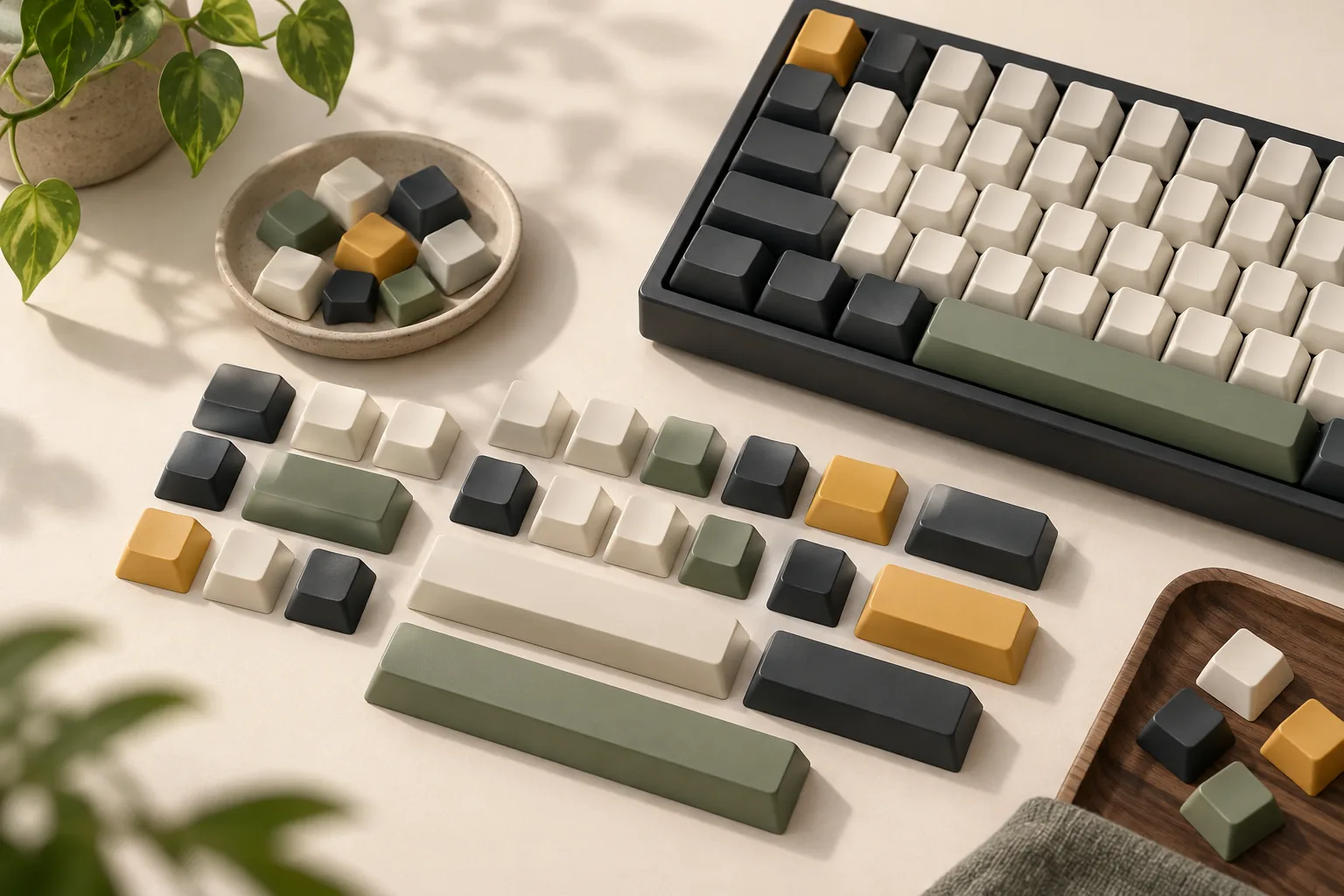
First, separate the shopping formats. A keycap set is a package of replacement caps; an extension kit supplements another kit; an artisan accent is a decorative keycap intended for a selected position. Use those categories to organize your comparison, then confirm the actual contents in the selected listing.
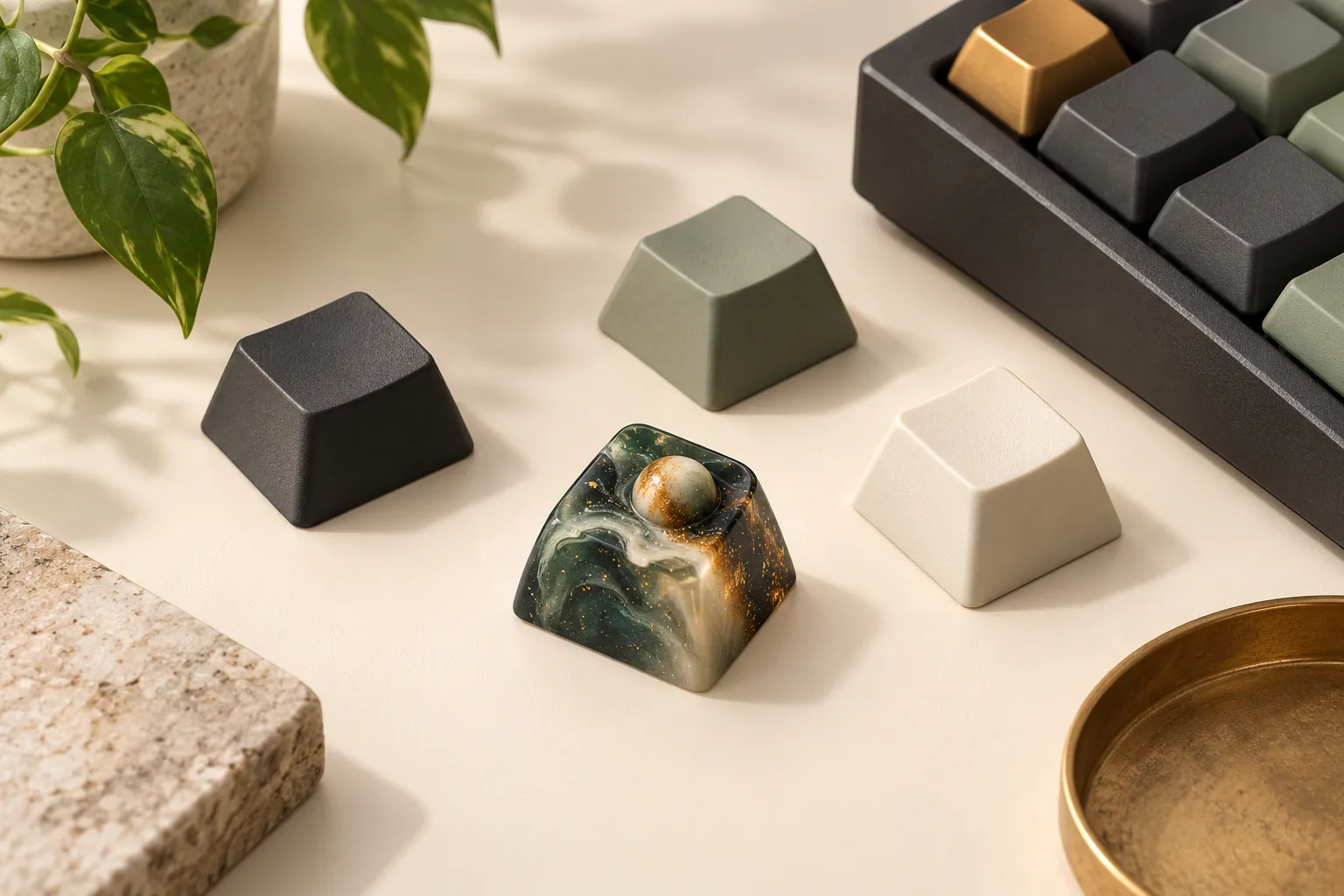
The difference is visible in the catalogs. Finalkey's anime category presents themed sets with Cherry-profile and PBT filters. Kawaii Keycaps' anime category describes resin artisan designs and lists decorative forms, including rotatable One Piece hats and a JoJo's Bizarre Adventure Enter-key design. These pages illustrate shopping formats; their category labels do not establish an individual item's fit or artwork permission.
Choose a set if your goal is to replace the main group of caps with a coordinated design. Choose an artisan accent if your goal is to feature a particular character or sculpture at a selected position. Consider an extension kit only after identifying which keys your base kit lacks.
Before comparing products, record:
- Exact identity: product name, maker, design, and version.
- Selected option: character, color, shape, or kit choice.
- Package contents: included caps and accessories.
- Intended use: whole-board replacement, added coverage, or decorative accent.
For custom anime keycaps, ask what the selected customization includes and whether the artwork source is documented. Keep a copy of the chosen option and its contents so you can compare the order confirmation with your original selection. Use the custom-keycap order checklist to define the requested result.
Read the exact product listing
The examples below show how different kinds of documentation answer different buying questions. Manufacturer details in this table come from URL-specific search excerpts captured October 15, 2026.
| Exact product | Documented listing statements | What still needs checking |
|---|---|---|
| Attack on Titan x Higround Titan Keycaps | Described as a collaboration; 68 caps for a 65% layout; OEM profile; 1.5 mm dye-sub PBT; side legends; keycap puller included | Exact key sizes, row assignments, mounting details, and coverage for your keyboard |
| Dwarf Factory One Piece Artisan Keycap | States an official Toei Animation license and compatibility with Cherry MX switches and clones | Selected option, package quantity, dimensions, placement, and surrounding clearance |
| Dwarf Factory Yu-Gi-Oh! 3: Winged Dragon of Ra | Identifies Dwarf Factory as designer, Eminent Crafts as licensor, and Cherry MX/clone compatibility | Selected option, package contents, dimensions, and suitability for the intended position |
For a worked example, suppose your keyboard is described as 65%. Higround's matching layout label makes its Titan set relevant to investigate. Before ordering, compare its included-key inventory with every position you intend to replace, especially the modifiers and spacebar.
Record the OEM profile and side legends as separate details to inspect. The listed thickness and material describe construction, while the included puller identifies an accessory. None of those statements completes the missing geometry check. If a required key's size or mount remains unknown, ask for an inventory diagram or written confirmation.
This approach also keeps comparisons fair: compare complete kits by their inventories and artisan accents by their selected form and intended position.
Check the artwork source for the exact design
Look for a statement attached to the actual product you are considering. Record who designed it and who is named in its licensing statement. Preserve the wording's scope rather than extending it to other designs in the same store.
Separate licensing from design attribution
Dwarf Factory's One Piece listing states an official license granted by Toei Animation. Its Winged Dragon of Ra listing identifies Dwarf Factory as designer and Eminent Crafts as licensor. These are manufacturer statements about those particular products, rather than an independent rights investigation.
Design attribution answers who is credited with creating the item. A licensing statement identifies the permission claimed for that product. Keep both fields in your notes, and ask for clarification if a selected variant's relationship to the statement is unclear.
Higround's Titan keycap listing describes an Attack on Titan collaboration. Report that wording as supplied; it does not provide the same named-licensor detail as the Dwarf Factory examples.
Treat character names as discovery clues
A familiar series title helps you locate a design. It does not resolve the provenance question by itself. For example, the captured Bing description for MyAnimeKeycaps groups sets around One Piece, Genshin Impact, and Chainsaw Man. That search excerpt supports a catalog observation only; it supplies no item-level licensing or fit evidence.
If provenance matters to your purchase and the exact design has no clear statement, request the designer and licensor information before proceeding. Missing documentation is unresolved evidence, not proof that a product is authorized or unauthorized.
Complete a fit worksheet
Gather your keyboard's exact model and layout documentation alongside the selected keycap kit's inventory. Work through the worksheet for the positions you plan to replace. The questions deliberately separate the documented MX stem statements from geometry that remains unconfirmed in the Dwarf Factory examples.
| Check | What to compare or request | When to pause |
|---|---|---|
| Stem | Keyboard switch documentation and the exact cap's stated mounting family | Either side lacks a clear specification |
| Profile and row | Cap profile, intended row, and the row assignment of included keys | The needed row or position is unidentified |
| Key widths | Your layout diagram and the kit's per-key widths, using the same unit labels | A required width is missing or ambiguous |
| Modifiers | The actual Shift, Enter, Backspace, and bottom-row keys in both inventories | A required key has no documented match |
| Spacebar | Required width, underside mount arrangement, and supplied option | Only a top-view image is available |
| Stabilizer mounts | Keyboard requirements and clear underside photos of the relevant caps | Mounting details cannot be compared |
| Decorative clearance | Artisan height, footprint, and intended placement beside surrounding keys | Dimensions or placement evidence are missing |
For this check, the stem is the cap's mounting connection, profile describes its shape and height arrangement, and row identifies its intended position. For wider keys, include the stabilizer mounting details in your comparison. Ask the seller to explain any unfamiliar labels rather than guessing from a photograph.
Dwarf Factory's stated Cherry MX/clone compatibility answers the mounting-family question only to its explicit extent. Keep row, width, mounting arrangement, and sculpture clearance as separate open questions. Do not extend that statement to an undocumented switch family or a specific keyboard.
Use a simple result for each row: confirmed, does not match, or unknown. Proceed only when every required position is confirmed. If you plan to replace just one accent key, concentrate the check on that position and its surrounding space.
Inspect legends and decorative shapes
Legends are the printed characters used to identify keys. Higround's Titan listing documents side legends, so request photos that show them from a normal seated viewing angle. Decide whether their placement suits how often you look down to identify a key.
For decorative forms, ask for views that reveal the entire shape. Kawaii Keycaps' catalog includes rotatable hats and an Enter-key form, but the captured category text does not establish their dimensions or clearance on your keyboard.
Request the evidence needed for your intended use:
- A top view showing the selected design and visible characters.
- An angled view showing legend placement and sculpture height.
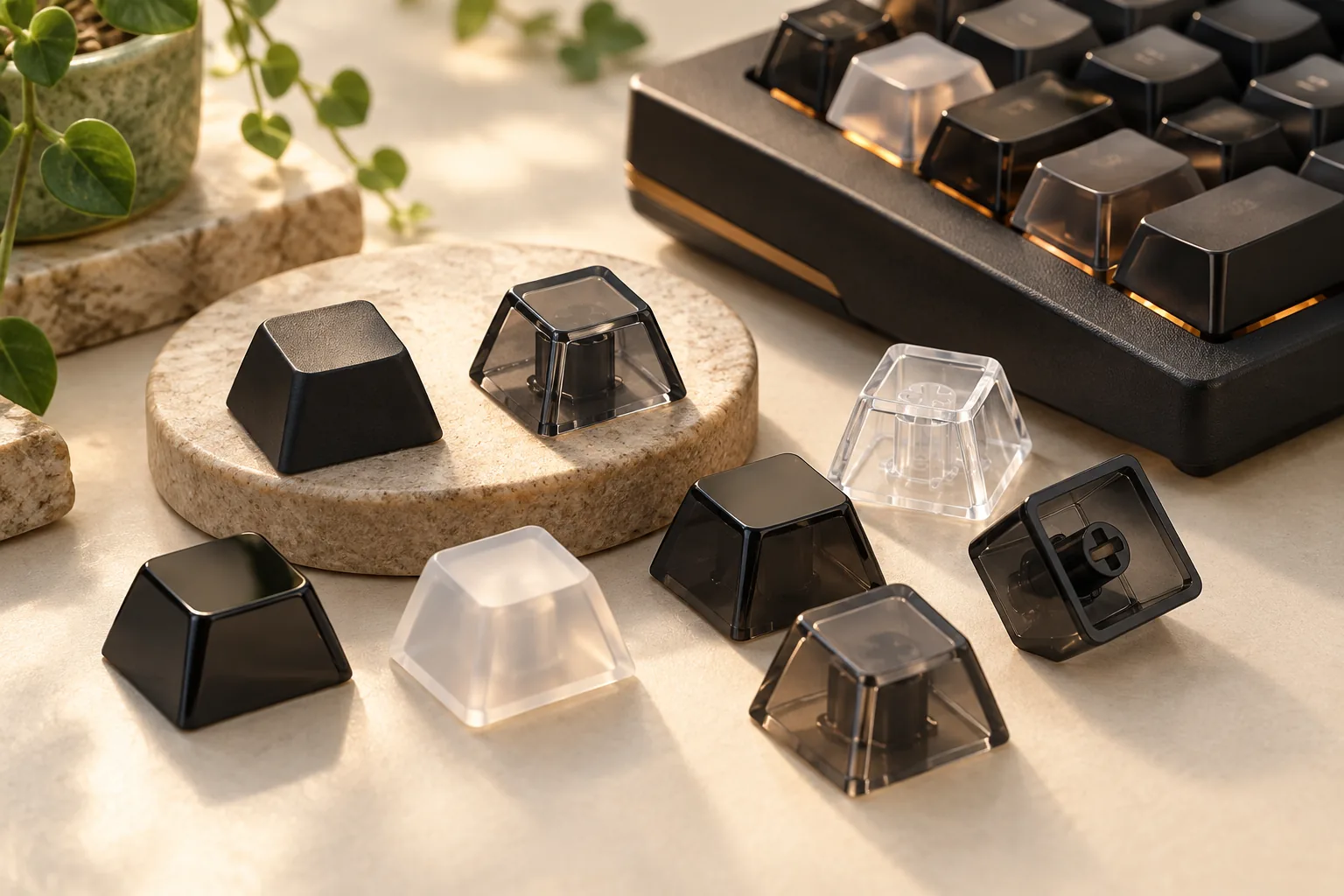
- An underside view showing mounting details.
- Dimensions for any protruding decoration.
- Exact-item documentation if shine-through is a purchase requirement.
The captured evidence provides no independent readability, backlight, or clearance tests. Use photos and specifications to decide what requires confirmation; reserve claims about actual performance until suitable evidence is available.
Verify the order and seller support
Before paying, compare the cart with your product notes. Confirm the design, selected option, quantity, included keys, accessories, and delivery destination. For a US order, verify that the exact item can be shipped to your address and that the support channel handles that order.
Read the current conditions for the selected item and ask:
- Can an opened or installed item be returned?
- What happens if a key is missing, damaged, or different from the selected option?
- Who handles a compatibility dispute, and what documentation is required?
- Where would a return go, and who pays the return shipping?
- Are special conditions attached to this particular kit or customization?
If an essential fit detail remains unknown, send a focused question: “Can you confirm the selected kit's included-key inventory and mounting details against my keyboard's layout documentation, including the spacebar and modifiers?” Attach the relevant diagrams and request a written answer.
Keep that response with the order confirmation. This guide does not establish current prices, availability, delivery promises, or return eligibility for the examples; check those conditions directly before ordering.
Frequently asked questions
Does an anime keycap set include everything shown?
Confirm the included-key inventory for the selected option before buying. Higround's documented Titan package contains 68 keycaps and a puller; use that stated package as your starting point. Ask the seller to identify any displayed components or alternate caps that are outside the option you selected. See the Titan listing.
Does Cherry MX compatibility prove an artisan will fit?
It documents the stated mounting family, while other checks remain open. Dwarf Factory's One Piece listing specifies Cherry MX switches and clones. Compare the selected artisan's dimensions, intended position, and clearance with your keyboard before treating it as a confirmed match. See the manufacturer's product statement.
How should I check manga keycaps or character designs?
Use the same product-level process: record the exact design, identify its credited creator, and look for a licensing statement attached to that item. If the evidence stops at a character name or catalog category, ask for clarification. The Winged Dragon of Ra listing illustrates separate designer and licensor statements.
Make the purchase decision
Choose anime keycaps once the selected package, artwork documentation, physical fit, and order conditions meet your requirements. A set needs complete coverage for the keys you plan to replace; an artisan needs a confirmed match at its intended position. Complete the worksheet, then send the seller any unresolved questions before placing the order.