As an Amazon Associate we earn from qualifying purchases.
Before ordering 3D printed keycaps, verify the exact material and production method, request clear finish photographs, and get mounting confirmation for your keyboard and intended key position. Then check the included pieces and the seller’s custom-order, cancellation, and defect terms. A material name or an MX compatibility label leaves several purchase questions unanswered.
This guide is for shoppers buying finished keycaps, whether that means a decorative replacement key or a personalized set. The examples below show how to read listings and turn missing information into specific seller questions.
Quick buying rule: Proceed when the seller’s answers cover your selected item, keyboard, finish, and remedy. Pause when an essential requirement—such as mounting fit or a required legend—remains unconfirmed.
Editorial approach: This is a research-based guide without hands-on product testing. Product and policy information was captured October 15, 2026; the 3dkeycap FAQ evidence is a captured search excerpt. Examples illustrate verification questions rather than product rankings.
Jump to: Listing comparison · Materials · Mounting · Finish · Care · Order terms · Seller checklist · FAQ
Compare what the listings actually establish
Read a listing in two parts: what the seller explicitly states and what you still need confirmed. Keep the exact model or selected option beside those notes. The following examples demonstrate that distinction; none establishes a verified match for your keyboard.
| Example | Captured seller information | Follow-up before ordering |
|---|---|---|
| MG DKC-13 | Resin, 1U, production described as 3D printing plus handmade work, and a Cherry MX/clones compatibility label. MG product page | Ask for the underside, total height, intended row, and confirmation for your exact keyboard and key position. |
| FacFox Mandalorian and Storm Trooper caps | Resin, 3D printing, an 18 × 18 mm footprint, differing but unspecified heights, and an MX cross-shaft mounting statement. FacFox listing | Ask for the selected design’s height, underside dimensions, neighboring-key clearance, and included pieces. |
| 3dkeycap material options | The captured FAQ excerpt describes DLP resin printing after ordering and nylon supplied through JLCPCB. 3dkeycap FAQ | Confirm which material, process, surface treatment, and care instructions apply to the item you select. |
Use this table to identify missing answers rather than choose a winner. A more detailed listing can make your next question easier to formulate without proving better finish, greater durability, or a more suitable fit.
Confirm the material and production method
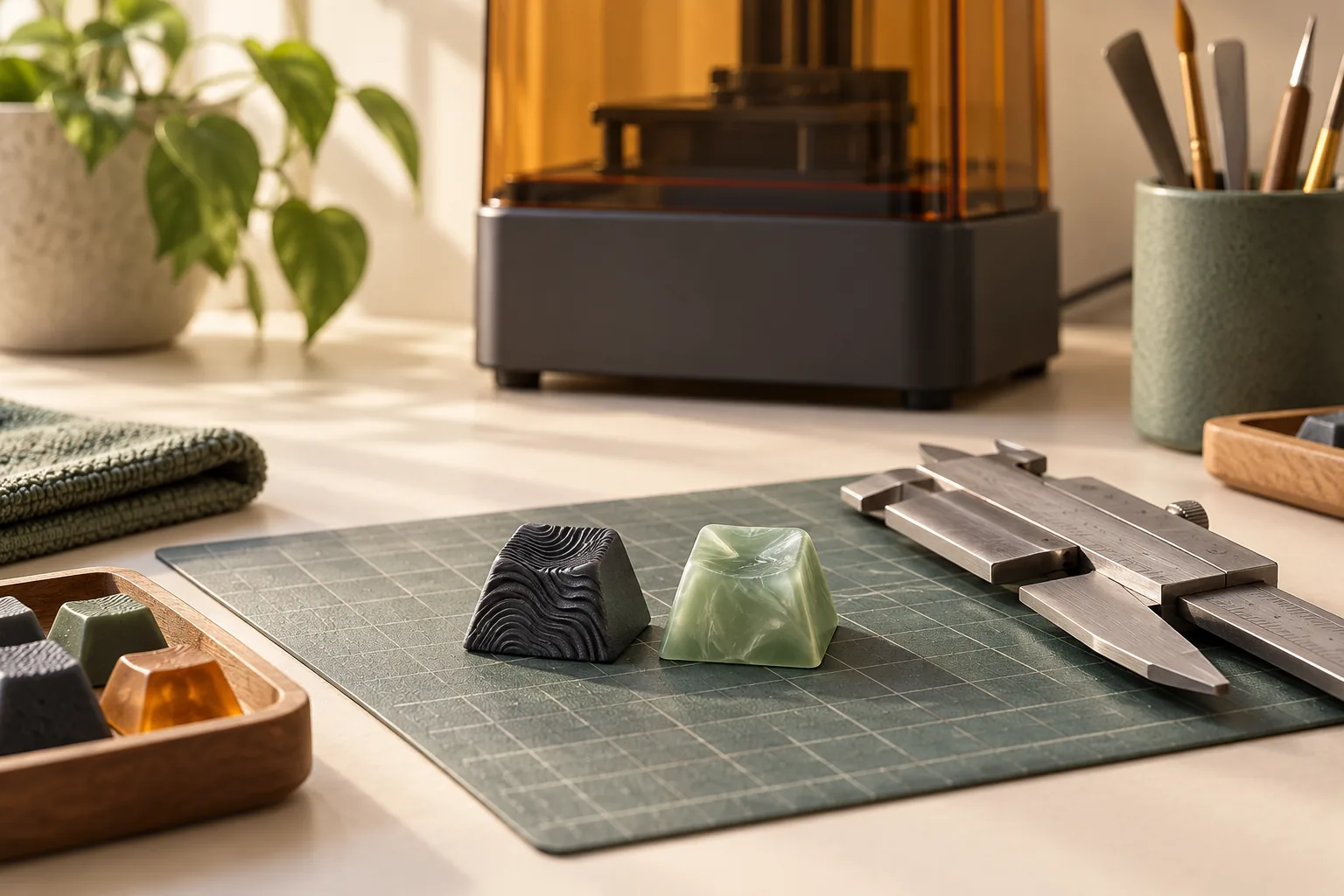
Record the base material separately from later finishing. Ask which parts of the item are printed and whether painting, polishing, coating, or other hand finishing follows. MG’s DKC-13 page, for example, lists both “3D printing + Handmade,” but that wording does not identify every finishing step. Source: MG DKC-13
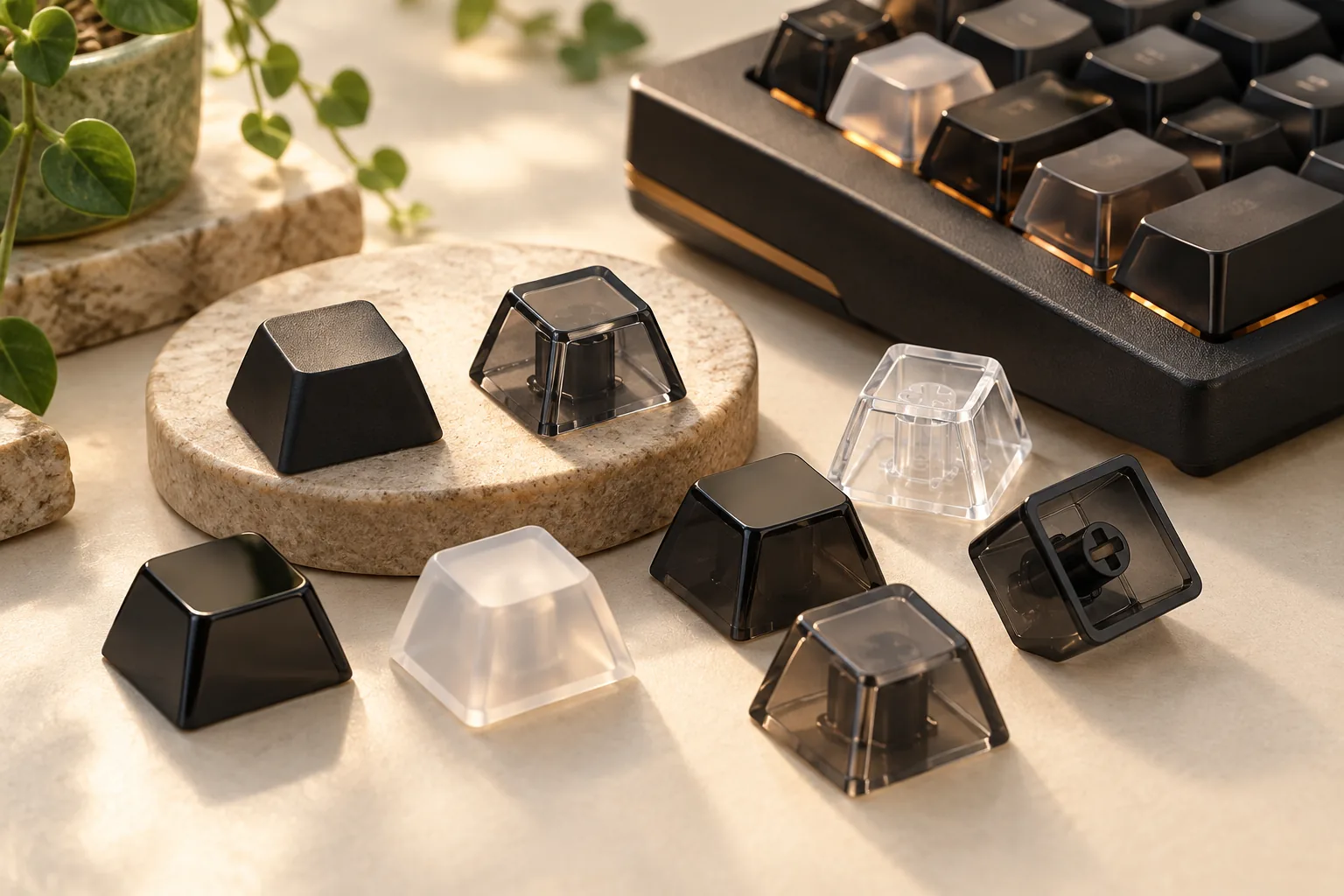
The captured 3dkeycap FAQ excerpt describes that maker’s nylon as rougher and opaque, and its resin as smoother and somewhat translucent. It also says resin light transmission depends on color and thickness. Treat those descriptions as information about that maker’s materials, rather than a universal resin-versus-nylon comparison.
If you want a textured surface, ask for close-ups of the selected nylon option. If light transmission matters, request photographs of the selected color and thickness with the lighting on and off. Choose according to evidence for the item you will receive; the material label alone does not resolve your finish or lighting requirements.
Verify mounting for your exact key position
A fit request should identify your keyboard, switch, and intended replacement position. Ask the seller to address those details together. A general compatibility statement is useful background, but it does not supply the missing dimensions in either illustrated product listing.
Separate mounting labels from physical dimensions
MG lists DKC-13 as 1U and compatible with Cherry MX and clones. FacFox describes MX cross-shaft mounting and an 18 × 18 mm footprint, while leaving the different heights unspecified. These are seller statements; neither source supplies enough geometry to verify every keyboard or MX-style variant. MG listing · FacFox listing
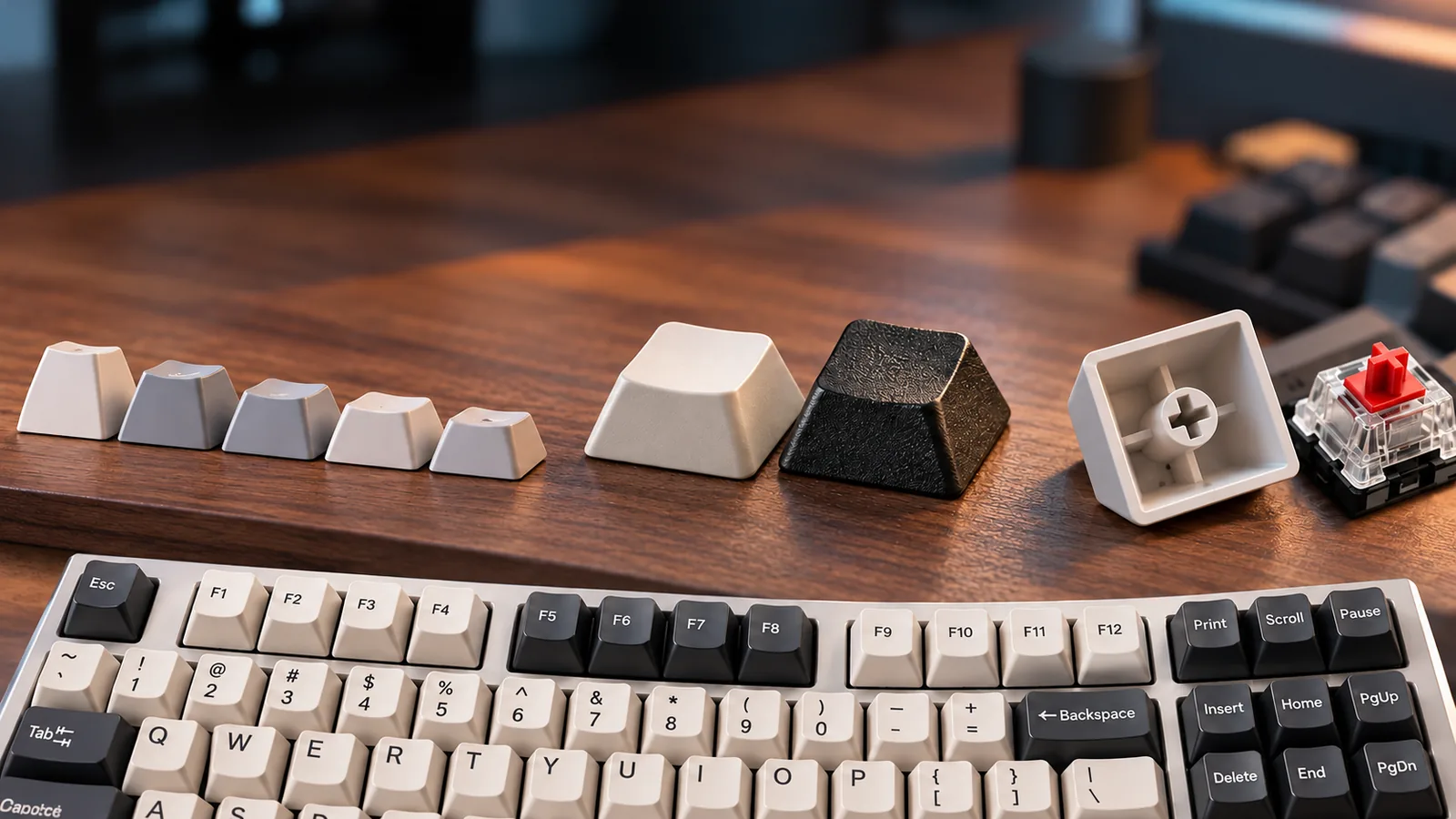
Request the stem family and a clear underside photograph showing the mounting socket. Ask for width and depth, total height, and the intended row or profile—the shape and height intended for that keyboard position. Keep an unspecified measurement marked as unknown rather than substituting a dimension from another keycap.
Check the space around the key
Send an overhead photograph of the intended position and ask whether the selected design clears adjacent keys during use. Request clarification about any sculpted parts that extend beyond the stated footprint. For the FacFox examples, the missing height is a specific reason to ask for further dimensions before deciding on placement. The artisan-keycap clearance checks provide a separate way to evaluate the intended position.
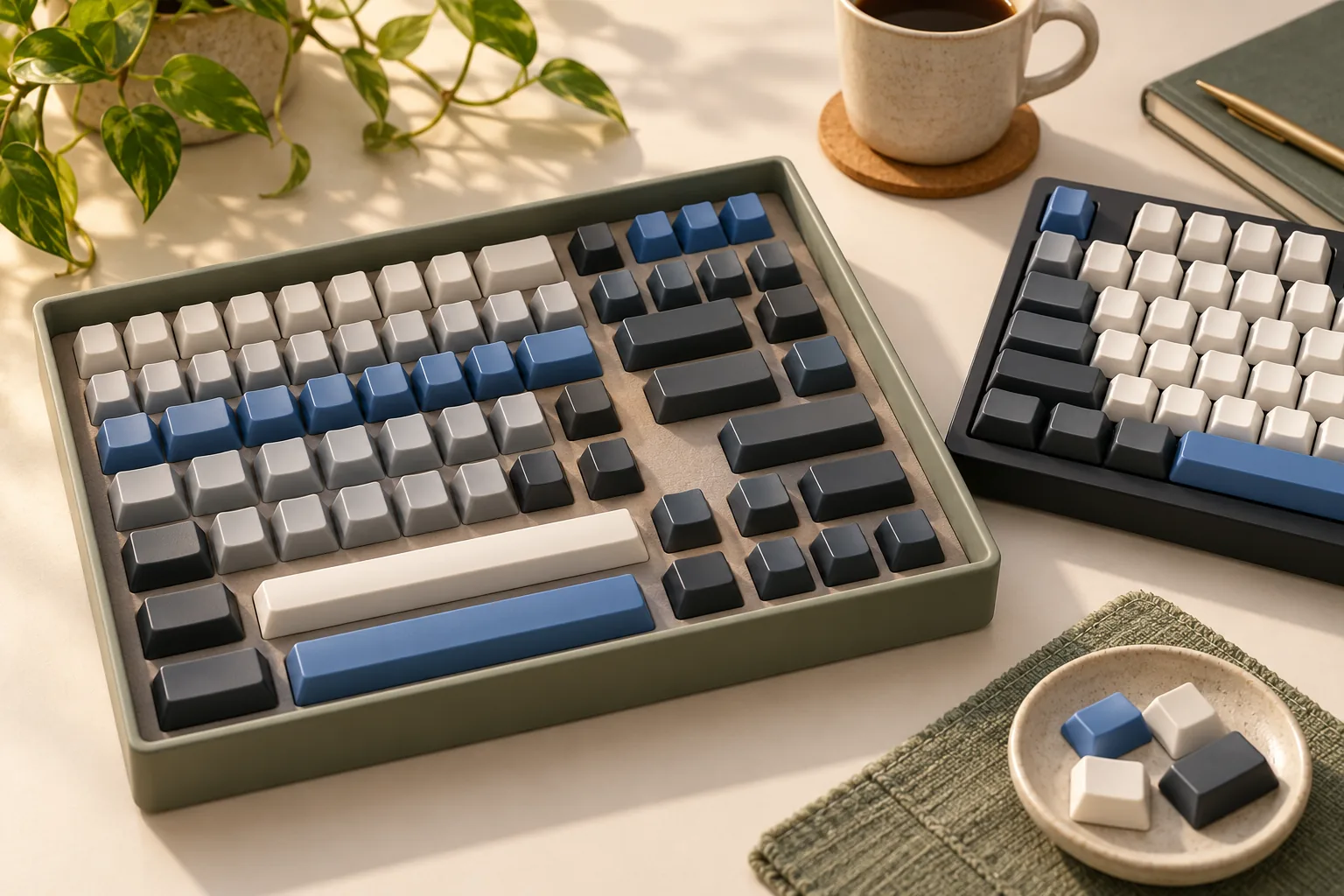
For a larger key, request stabilizer mounting locations and dimensions wherever applicable. For a set, request an itemized inventory of key sizes, row assignments, and legends—the letters or symbols on the caps. Compare that inventory with each position you intend to replace before approving the order.
Inspect finish photos and legend details
Request current close-ups of the selected design’s top, sides, and underside. Ask whether the photographs show the actual item, a representative sample, or a rendering. For a custom order, establish what you can approve before production and what the seller will provide before shipment.
Separate appearance from material identity. FacFox explicitly says the shiny coating on its Mandalorian and Storm Trooper caps is not metallic paint. That statement does not establish the coating’s formulation or wear performance. Source: FacFox product listing
Use the photographs to ask about visible marks, surface texture, paint boundaries, and areas around the mounting socket. For legends, confirm the exact text, placement, orientation, and application method. If you expect illuminated legends, request an example of that selected option under lighting rather than treating a general backlighting label as confirmation.
Approve a defined result: Save the agreed design, color, legend spelling, and finish reference with the order. Ask which variations the seller considers acceptable so you can decide whether those terms match your expectations before paying. Use the custom-keycap order checklist to record the agreed result before production.
Request care instructions and durability evidence
Ask for care instructions for the finished material and coating you are ordering. Request guidance on cleaning, installation, removal, and any conditions the maker says to avoid. Keep those answers with the product information for later reference.
The captured 3dkeycap FAQ excerpt describes cleaning, baking, and UV curing during production. Those manufacturing steps do not establish a consumer cleaning method. Do not turn a production workflow into instructions for treating a finished cap at home.
If a seller makes a durability claim, ask what was evaluated, under which conditions, and whether the result applies to your selected finish. The available evidence here does not support lifespan rankings or measured comparisons of strength, sound, feel, or coating wear.
Check custom-order and return terms
Read the policy for the merchant and selected order before paying. Separate cancellation before production, returns after delivery, and remedies for defects or shipping damage. The examples below describe captured shop terms, not universal return rights.
3dkeycap: return eligibility and personalization
The 3dkeycap return policy captured October 15, 2026 requires return or exchange requests within 30 days of delivery and items in new or slightly used condition. Custom or personalized products, including custom legends, are excluded unless they arrive defective, damaged, or incorrect. Eligible noncustom, nondefective returns require the customer to pay return postage.
Before ordering, ask how the seller classifies your selected item and whether it is eligible for a nondefective return. Do not assume a general return window overrides a custom-product exclusion. For a problem on arrival, the policy asks buyers to contact the shop promptly and provide the order number and photographs when possible; contact the seller before sending anything back.
FacFox: production cutoff and damage contact
The FacFox policy captured October 15, 2026 allows cancellation of customizable items before they enter production. After production begins, the shop may attempt cancellation without guaranteeing success. For manufacturing flaws or shipping damage, it requests support contact within seven days of delivery and offers a refund or free replacement including shipping.
FacFox also says it does not formally recognize buyer’s remorse when an order is correctly fulfilled, arrives in good condition, and has no production errors. The seven-day contact period concerns damage or manufacturing problems; it is not a general try-it-and-return-it offer. Reconfirm the terms for your selected order and ask what happens if a seller-confirmed fit proves incorrect.
Send this checklist before ordering
Copy the following questions into a message to the seller, adding your keyboard model, switch, intended key position, and selected product option. Ask the seller to identify any answer it cannot confirm.
- Product: Which exact design, material, color, finish, and quantity will this order include?
- Production: What is printed, and what hand finishing or coating follows?
- Mounting: Can you confirm this item for my keyboard, switch, and intended position? Please provide an underside photograph.
- Dimensions: What are its footprint, total height, and intended row or profile? Does the design clear neighboring keys?
- Larger keys or sets: What stabilizer dimensions apply, and which key sizes, row positions, and legends are included?
- Appearance: Can you provide current close-ups and explain any expected finish variation?
- Customization: What design or legend approval will I receive, and when do changes or cancellation become unavailable?
- Care and remedies: What care instructions apply, and what are the defect-contact deadline, return exclusions, and postage responsibilities?
Save the replies with the order confirmation. At checkout, verify the selected option, included pieces, total charge, delivery estimate, and applicable policy. If an essential fit or appearance requirement remains unanswered, resolve it before committing to customization.
Frequently asked questions
Does an MX compatibility label guarantee fit?
The illustrated listings do not establish fit for every keyboard or MX-style variant. MG provides a Cherry MX/clones label, while FacFox gives an MX cross-shaft statement and partial dimensions. Request confirmation for your keyboard and key position, supported by underside photographs, height, and clearance information. MG · FacFox
Should I choose resin or nylon for backlighting?
Start with evidence for the selected option. The captured 3dkeycap FAQ excerpt describes its nylon as opaque and its resin as somewhat translucent, with transmission depending on color and thickness. Ask for lighting photographs of the exact option you want; this maker-specific description does not establish performance across other sellers. Source: 3dkeycap FAQ
Can I return a keycap with a custom legend?
Check the merchant’s custom-order policy before approving the legend. Under 3dkeycap’s captured policy, personalized products, including custom legends, are excluded from returns or exchanges unless defective, damaged, or incorrect. Confirm the selected order’s current terms and ask how the seller handles an error in an approved design. Source: 3dkeycap return policy
Before you place the order
Buying 3D printed keycaps starts with matching the seller’s evidence to your requirements: material and process, documented appearance, mounting details, included pieces, and applicable remedies. Keep unresolved dimensions and finish questions visible in your notes. Send the checklist to the seller, then order once the answers support the exact item and placement you want.